TB-500
Fragment evidence gap · No established human dosing schedule
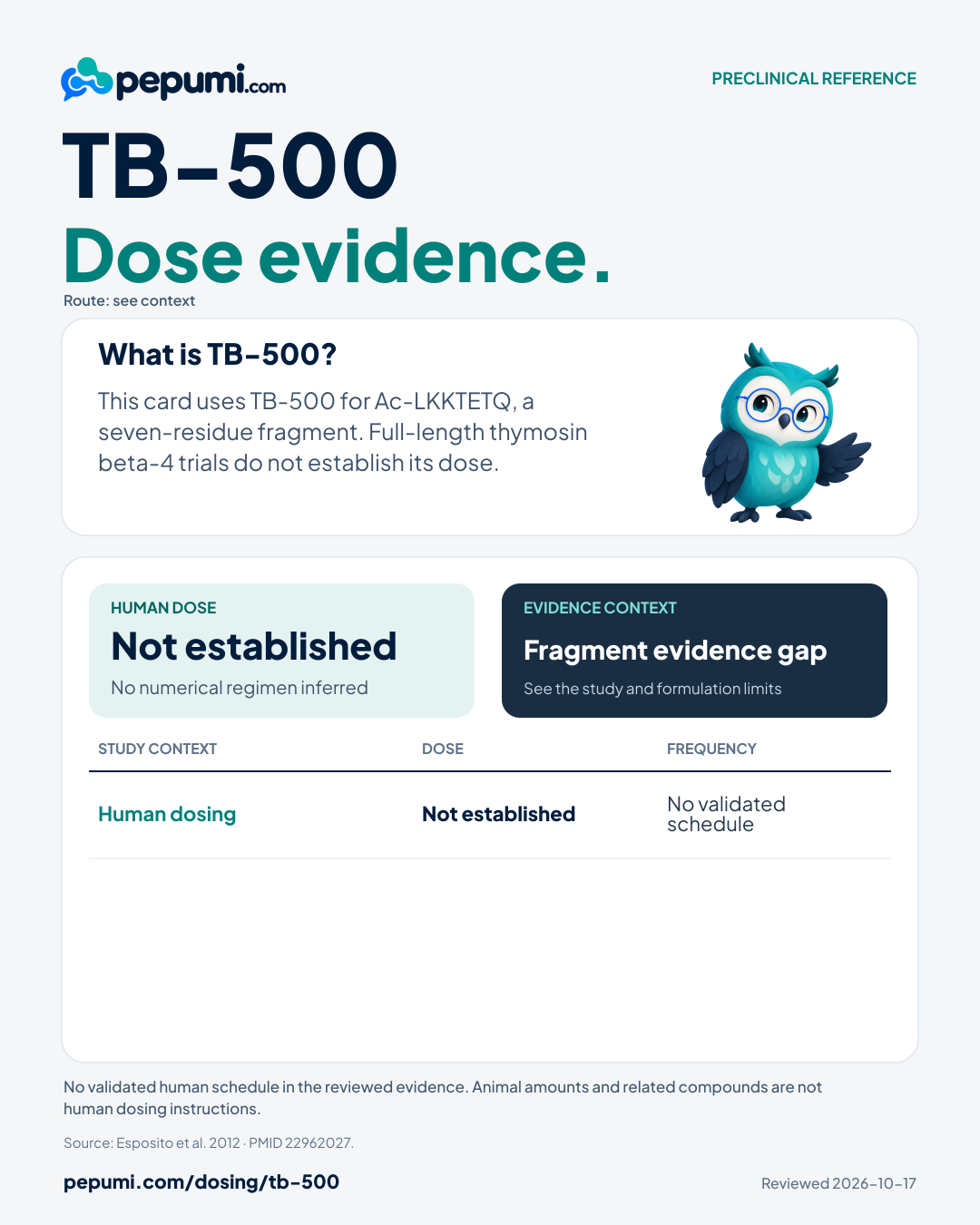
This card uses TB-500 for Ac-LKKTETQ, a seven-residue fragment. Full-length thymosin beta-4 trials do not establish its dose. Fragment evidence gap · No established human dosing schedule.
Reviewed 2026-10-17. A source reference, not a personal treatment plan. Discuss treatment decisions with a qualified clinician.
Dose reference
| STUDY CONTEXT | Dose | Frequency | Context |
|---|---|---|---|
| Human dosing | Not established | No validated schedule | Ac-LKKTETQ, unacetylated LKKTETQ and full-length TB-4 are different molecules. A TB-4 trial regimen cannot be copied onto this fragment. Source |
Ac-LKKTETQ, unacetylated LKKTETQ and full-length TB-4 are different molecules. A TB-4 trial regimen cannot be copied onto this fragment.
Source context
The cited analytical study identifies acetylated thymosin beta-4 fragment 17–23 in a product sold as TB-500. Identification is not a clinical efficacy or dose-finding study.
Reading the dose correctly
Ac-LKKTETQ, unacetylated LKKTETQ and full-length TB-4 are different molecules. A TB-4 trial regimen cannot be copied onto this fragment.
Download the chart
Further reading
TB-500 monograph on myPeptides
References
Why is there no numerical dose for TB-500 on this card?
Ac-LKKTETQ, unacetylated LKKTETQ and full-length TB-4 are different molecules. A TB-4 trial regimen cannot be copied onto this fragment.
Does a missing dose mean that no research exists?
This card describes fragment evidence gap. Evidence of a mechanism, a laboratory finding or an exposure does not by itself establish a useful and safe human treatment schedule. The monograph explains the distinction.